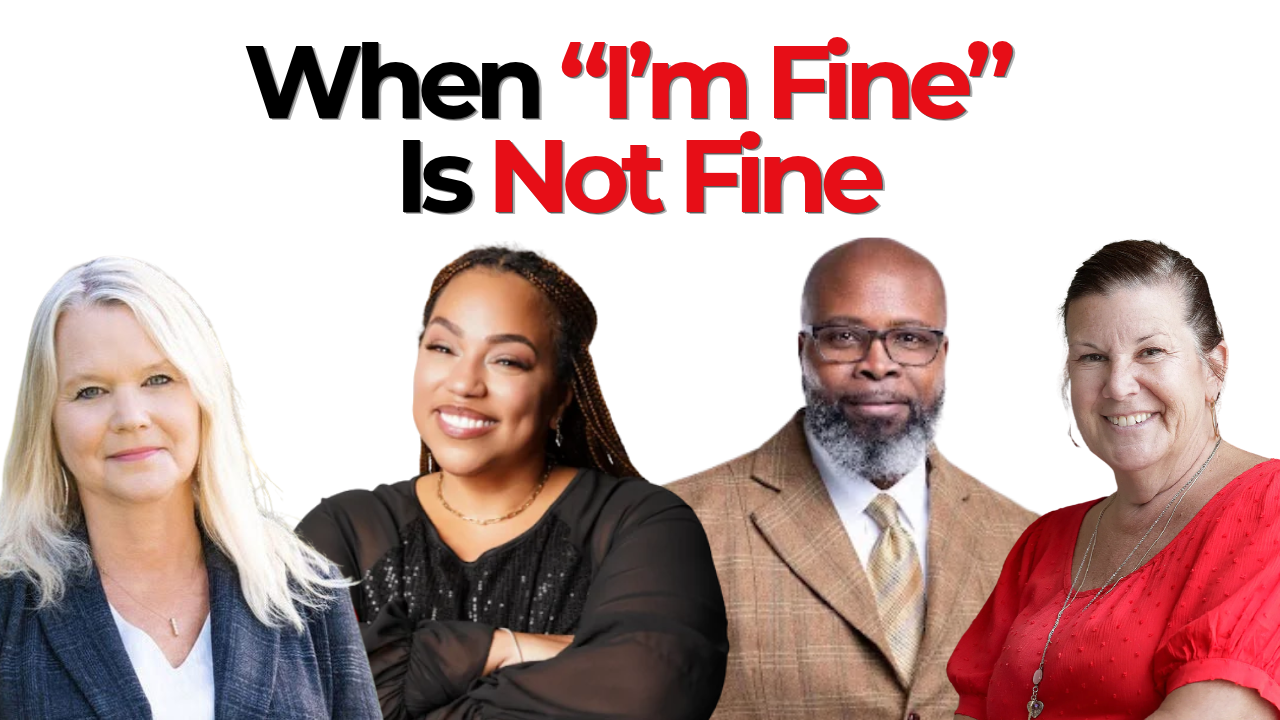
When “I'm Fine” Is Not Fine: Suicide Prevention Lessons From Panelists at Say the Words suicide symposium 2026
Four panelists from the Say the Words Suicide Symposium on why “I'm fine” isn't always the whole story. Barb Bigalke, Lisamarie Arnold, Dr. Maria Amarante and Mark Ross talk about warning signs, stigma, and what actually reaches someone in the moment. Watch or listen to the full conversation.
Margaux Baumgarten on Bipolar I, Years of Silence, and Planning for Postpartum
Margaux Baumgarten was diagnosed with bipolar I at 16 and spent years not mentioning it. On Success, Rewritten Ep 40 she shares how a NAMI referral changed that, plus the checklist she and her husband built and what postpartum planning looked like for her.
From Major League Baseball to Breathwork: Jamie Janko on Burnout and choice
After more than 12 years in Major League Baseball, Jamie Janko's body told her something her mind couldn't. She shares how burnout, a move to Bali, and breathwork reshaped what success means and how she built a business around her nervous system.

Redefining Success After Burnout and Selling Your Business with Crystal Vilkaitis
Crystal Vilkaitis built a company with an ads agency, an office near the ocean and a conference of its own, then spent years burnt out before she sold it in February 2026. She joins Emily to talk about missing the signs, the years it took to trust her own call, and what enough looks like now. Along the way she asks a question worth sitting with: do you really need a million dollars?

Beyond the Bipolar Label: Dr. Andrea Vassilev on Self-Stigma, Shame, and Identity
Diagnosed with a mood disorder at 14, psychotherapist Dr. Andrea Vassilev lost about 10 years of her life to bipolar before turning her lived experience into her life's work. She joins Success, Rewritten to talk about self-stigma, the bipolar spectrum, and why healing isn't linear.

Paul Gilmartin on Depression, Addiction Recovery, and Why Shame Never Heals
Paul Gilmartin spent 16 years making people laugh on TBS's Dinner and a Movie while quietly living with depression and addiction. The host of The Mental Illness Happy Hour talks about recovery, childhood adversity, and what actually helps when someone you love is struggling.

When Success Starts Costing More Than It Pays: Dr. Michael Filosi on Selling, Stress, and Starting Over
Michael Filosi built a dental practice nobody wanted into one four private equity firms fought to buy. From the outside it looked like a clean success story. Then the 3am panic attacks started, and he had to ask whether the success he had built was still worth what it was taking from him.

“I Thought the Ambition Would Go Away”: Emily Guarnotta on Motherhood, Mental Health, and Redefining Success
Dr. Emily Guarnotta treats postpartum depression for a living. That did not stop it from taking her months to recognize and admit her own. She joins Success, Rewritten to talk about motherhood, mental health, and why ambition does not have to disappear when you become a parent.

What’s More Important to You? Craig Smith on Career Pivots, Connection, and What Actually Lasts
Craig Smith has spent fifteen years selling to millions on live TV, but the real story is everything he had to unlearn about success to get there. From the golden handcuffs of a sales career to an awards ceremony that changed his direction, to the phone calls after his father’s death that revealed a man he never fully knew, Craig makes the case that the pivots are the whole point. His through line: build a message, and a life, that is clear, real, and repeatable.

You Don't Need to Hit Rock Bottom to Redefine Success
Emily thought a packed calendar was proof she was successful, right up until a manic episode at 28 forced a pause she never would have chosen. In this solo reflection on her Pool Nation Women's Summit keynote, she unpacks why busy is not the same as balanced, why no one else will manage your output for you, and how to build a structure you can return to. The takeaway: you don't need a diagnosis or a breaking point to redefine success.

Recovery Is Worth It: Jordan Kernen on Eating Disorders and Asking for Help
Jordan Kernen had a great childhood and no language for mental health until two traumatic events in college sent her searching for control, and found it in food and exercise. In this episode she traces the full arc, from a two year struggle and a medical crisis that nearly took her life, to three months at Rogers and the classroom she now runs on the belief that all foods fit. Her message for anyone still in it: ask for help sooner, because recovery is worth it.

Christine Burns on Redefining Her Identity After a Layoff and Building Community for Childfree Women
After 23 years in corporate, a 2023 layoff didn’t just cost Christine Burns a job. It took the identity she’d built her whole life around. She joins Emily to talk about rebuilding from scarcity, getting clear on what you offer, and creating Lady No Kids, a community for women without children by choice, chance, or circumstance.

Betting on Yourself: How Ali Schwartz Left Corporate for Music
Ali Schwartz spent over a decade climbing the corporate ladder while writing music on the side, until she left a director role at Fortune Media to pursue music full time. In this episode she talks about running her singing career like a business, why 20 million streams did not feel like the finish line, and building community through Pop Hang NYC. An honest look at betting on yourself and redefining what success means.

Quint Boa on Adapting to AI, Getting Sober, and What Success Really Costs
Quint Boa spent 25 years keeping his production company ahead of every technology shift, from VHS to generative AI, driven (by his own admission) by anxiety more than ambition. In this episode he opens up about adopting AI without treating his people as replaceable, 12 years of sobriety, and why he’s “out and proud” about being an alcoholic. It’s an honest conversation about evolving through constant change without losing yourself.

From Criminal Justice to Flowers: How Mikel McGee Built 414loral and Redefined Success
Mikel McGee had a master’s in criminal justice, a stable nonprofit job, and no plan to become a florist. On Success, Rewritten, the founder of Milwaukee’s 414loral traces the pivot from human-services work to a Bronzeville flower shop, and how she stopped measuring success in dollars.

From #1 Track Athlete to High Frequency Highway Founder: J Johnson Jr on Rewriting Success
J Johnson Jr was the number one ranked track athlete in the country before an ADHD diagnosis sent him looking for an alternative and, eventually, to sound. This is the story of how a skeptical experiment with a frequency video became High Frequency Highway, and how J's definition of success shifted from making money to raising the frequency of the planet.

What Everyone Should Know About Suicide
Most of us freeze up around the topic of suicide because we don't know what to say. Jay Laughrey and Charlotte Maya, who each lost someone to suicide, walk through the practical stuff everyone should know: what to say to someone who is struggling, how to ask directly, what actually helps a grieving family, and why 988 belongs in your phone.

Charlotte Maya on Surviving Suicide Loss and Loving Again
When Charlotte Maya's husband died by suicide in 2007, she was terrified she'd be ostracized by her community. Instead, honesty drew people closer. She joins Success, Rewritten to talk about grief, suicide literacy, and rebuilding a life she never expected.

When His Brother Died By Suicide, Jay Laughrey Learned What Rebuilding Really Means
Jay Laughrey built a thriving pool business, but the road there started with losing his brother and mentor, Jeff, to suicide in 2009. In this episode, Jay talks about grief, men's mental health, and what it actually takes to rebuild after the unthinkable.

Mental Health Habits That Make Me a Better Entrepreneur (Living with Bipolar Disorder and ADHD)
I didn't build the habits because I'm disciplined. I built them because I had no other option. In 2018, a manic episode turned into psychosis, and when I came back to work three months later, I had to rebuild everything. Here's what that rebuild looks like — and what it still looks like when life breaks the routine.